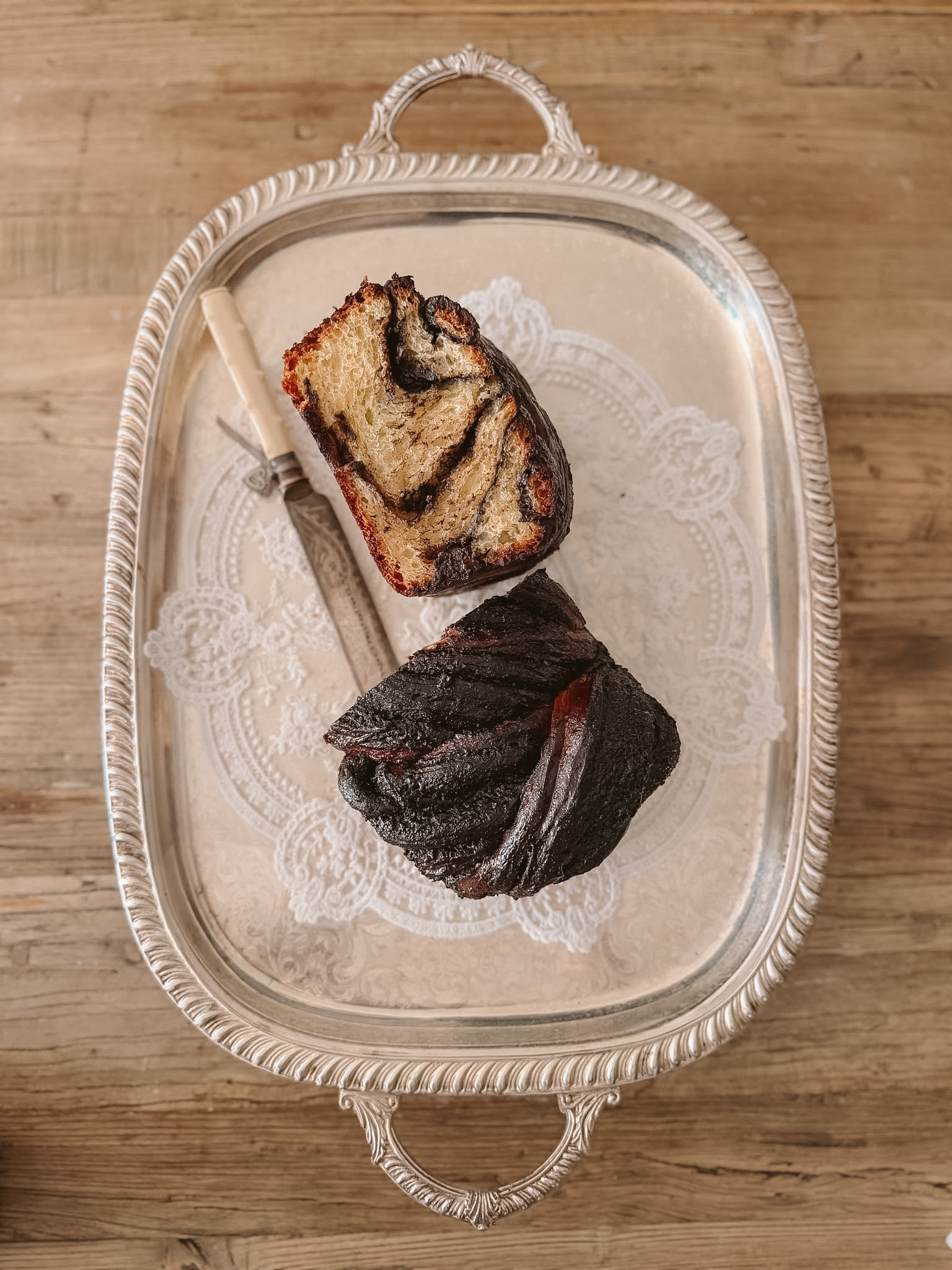
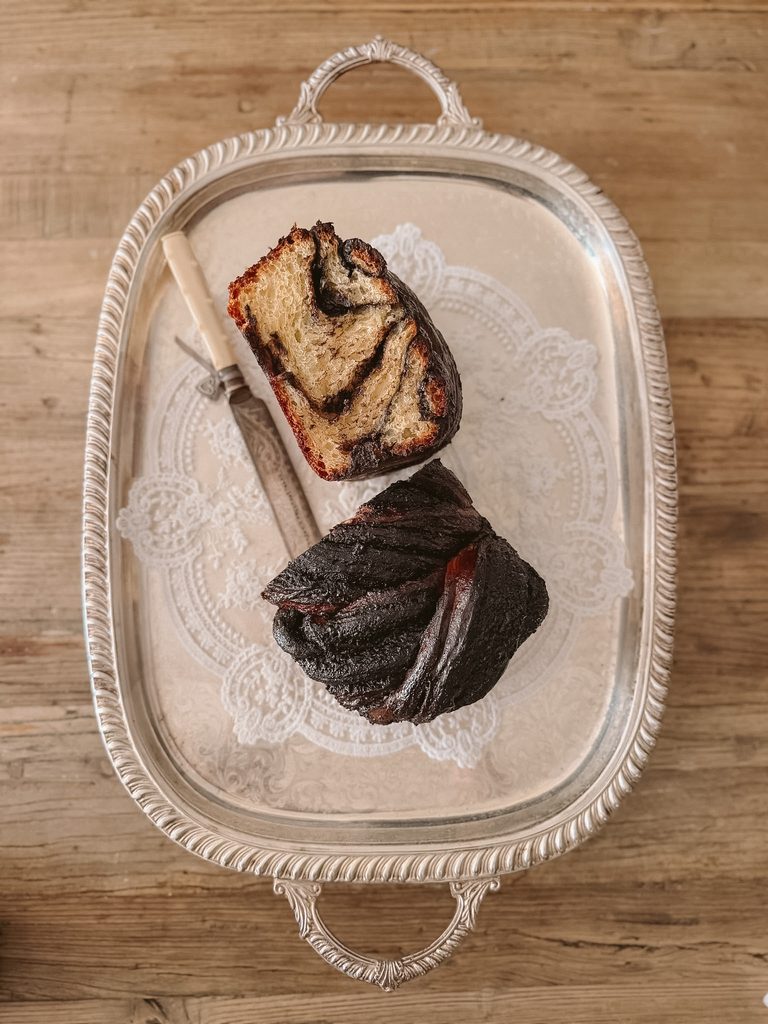
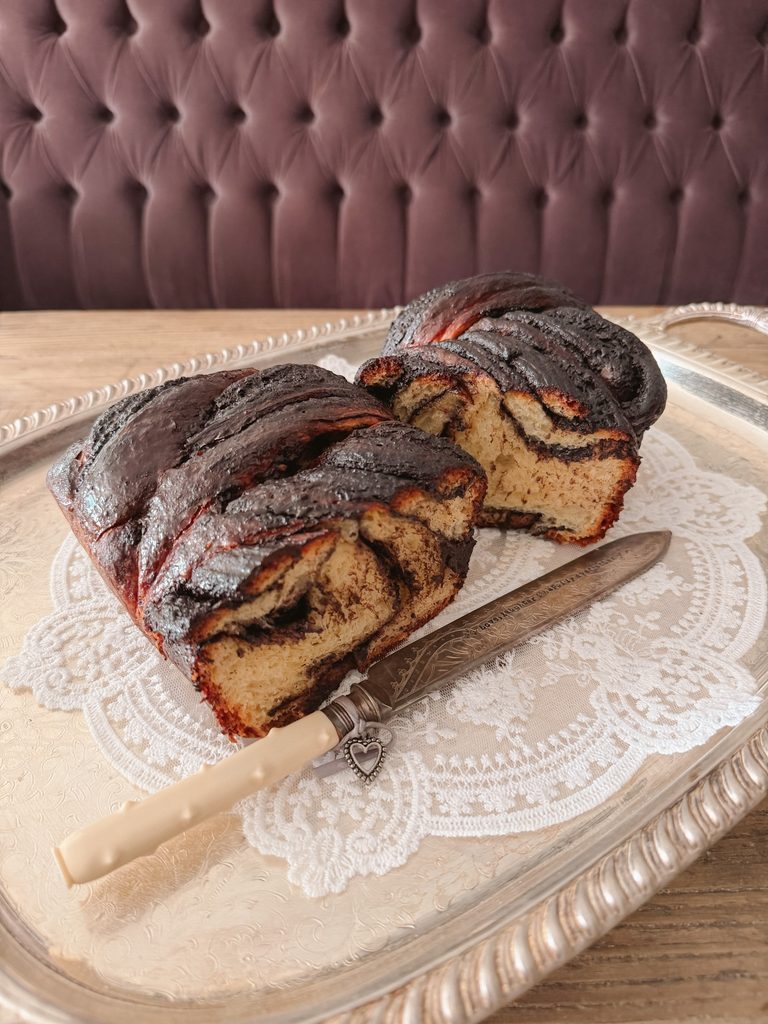
This homemade chocolate babka is a lovely weekend baking project, with a little patience rewarded by those irresistible chocolate swirls. And if you happen to have a few slices left the next morning, this chocolate babka makes the most incredible French toast — golden and crisp on the outside, soft and custardy in the middle, with all that chocolate melting into every bite.
Yield: 1 Loaf
Prep Time: 35 Minutes
Proofing Time: 2–4 Hours
Bake Time: 35–45 Minutes
Oven Temperature: 350°F (175°C)
Gather and measure all ingredients before beginning. Bring the butter and eggs to room temperature, lightly warm the milk, and grease a 9 × 5-inch loaf pan.
280 G Bread Flour
50 G Granulated Sugar
4–5 G Instant Yeast
75 G Beaten Whole Egg
9 G Egg Yolk
90 G Whole Milk, Lukewarm
60 G Unsalted Butter, Softened And Cubed
5 G Fine Table Salt
1 Tsp Vanilla Extract (Optional)
100 G Dark Chocolate (55–65% Cocoa)
60 G Unsalted Butter
25 G Granulated Sugar
15 G Cocoa Powder
1 Pinch Salt
1 Egg, Beaten
50 G Granulated Sugar
50 G Water
1 Cinnamon Stick
In the bowl of a stand mixer, whisk together the bread flour, granulated sugar, instant yeast, and salt. Add the beaten egg, egg yolk, lukewarm milk, and vanilla extract, if using. Mix until a rough dough forms.
Using the dough hook, knead until the ingredients come together and the dough begins to look smooth.
Add the softened butter a few cubes at a time, allowing each addition to incorporate before adding more. Continue kneading for approximately 8–12 minutes, or until the dough is smooth, elastic, and slightly tacky.
The dough should feel soft and supple rather than excessively sticky.
Transfer the dough to a lightly greased bowl and cover. Leave at room temperature, ideally around 24–26°C (75–79°F), until noticeably puffy and approximately one-and-a-half times its original size.
This may take 1–2 hours or longer, depending on the temperature of your kitchen. Follow the appearance of the dough rather than relying solely on the clock.
While the dough rises, gently melt the dark chocolate and butter together over a double boiler or in short intervals in the microwave.
Stir in the granulated sugar, cocoa powder, and salt until smooth. Set aside to cool until the filling is spreadable but no longer hot or runny.
Once the dough has completed its first proof, gently press it with your fingertips to release some of the larger air pockets. Transfer it to a lightly floured work surface.
Roll the dough into a rectangle approximately 30 × 40 cm (12 × 16 inches), about 5–7 mm thick. If the dough springs back while rolling, cover it and allow it to rest for 10–15 minutes before continuing.
Spread the chocolate filling evenly over the dough, leaving a small border around the edges.
Starting from the long side, roll the dough into a tight log, approximately 40 cm long. If the log feels too soft to handle, refrigerate it for 15–20 minutes to firm up.
Using a sharp knife, slice the log lengthwise down the middle to expose the chocolate layers. Twist the two halves together, keeping the cut sides facing upward to reveal the chocolate swirls.
Carefully transfer the twisted dough into a greased 9 × 5-inch loaf pan.
Cover the loaf loosely and leave it at room temperature until visibly puffy and expanded. This usually takes 1 hour, though it may take longer.
The dough should look airy, with the twisted layers visibly fuller. Avoid baking it while it still looks tight and dense.
Preheat the oven to 350°F (175°C).
Brush the babka gently with beaten egg. Bake for 35–45 minutes, or until deeply golden and baked through. If the top begins to brown too quickly, cover it loosely with foil.
For the most reliable result, check the centre with an instant-read thermometer. Aim for an internal temperature of approximately 190–200°F (88–93°C).
While the babka bakes, combine the sugar and water in a small saucepan. Bring to a gentle simmer, add a cinnamon stick stirring until the sugar dissolves and the flavour infuses.
Brush the syrup over the babka while it is still hot from the oven. This adds a delicate sheen and a little extra sweetness while helping keep the loaf moist.
Allow the babka to cool in its pan briefly before transferring it to a wire rack. Let it cool substantially before slicing so the crumb can set and the chocolate layers hold their shape.
Serve in thick slices alongside coffee or tea, and enjoy while the loaf is fresh.
On Proofing: Enriched doughs containing eggs, butter, and sugar can take time to rise. Room temperature and the condition of your yeast will influence the timing, so let the dough guide you through both proofs.
On The Chocolate: A dark chocolate with 55–65% cocoa gives the filling a rich flavour without making it excessively sweet.
On Storage: Store the cooled babka in an airtight container at room temperature for up to 2–3 days. Slices can also be frozen and gently reheated before serving.