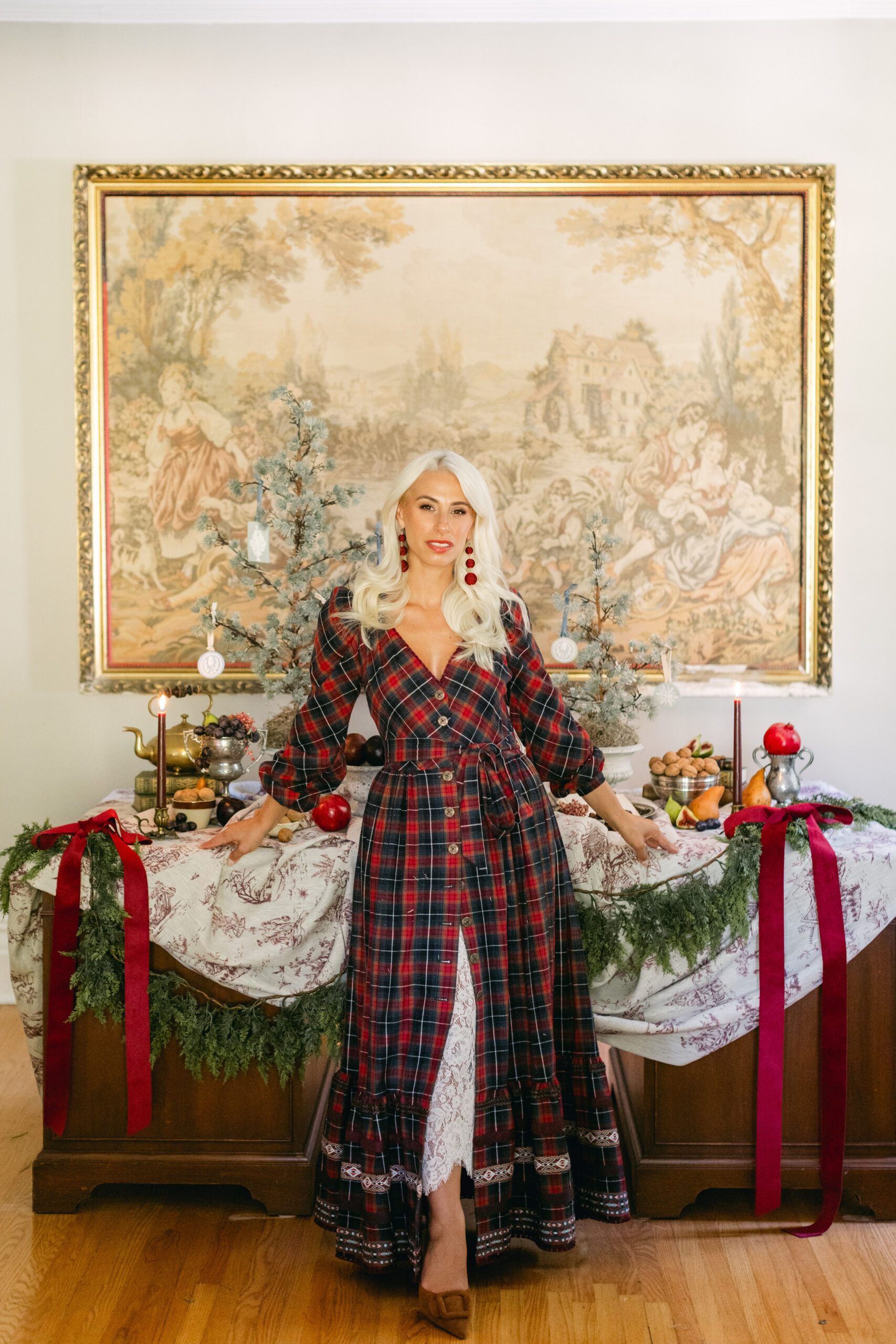
There’s a particular kind of magic that takes hold in Provence at Christmastime—a gentle, old-world charm where candlelight dances on stone walls, fresh citrus perfumes the air, and the table becomes the heart of the celebration. This year, I found myself drawn to one of Provence’s most beloved holiday traditions: Les Treize Desserts, or The Thirteen Desserts.
The Thirteen Desserts are served on Christmas Eve after a humble, meatless supper—seven small dishes followed by a generous spread of sweets. The number thirteen symbolizes Jesus and the twelve apostles, but beyond the religious meaning, it represents gathering, sharing, and savouring.
What I love most is how unpretentious yet abundant the tradition is. Nothing is overly elaborate or fussy. Instead, the table overflows with the fruits of the land: nuts, dried figs, honey, citrus, olive oil, and breads with stories woven into them. It’s a celebration of seasonal ingredients and regional pride, but also of community—neighbours and friends drop by in the days that follow to nibble on whatever calls to them.
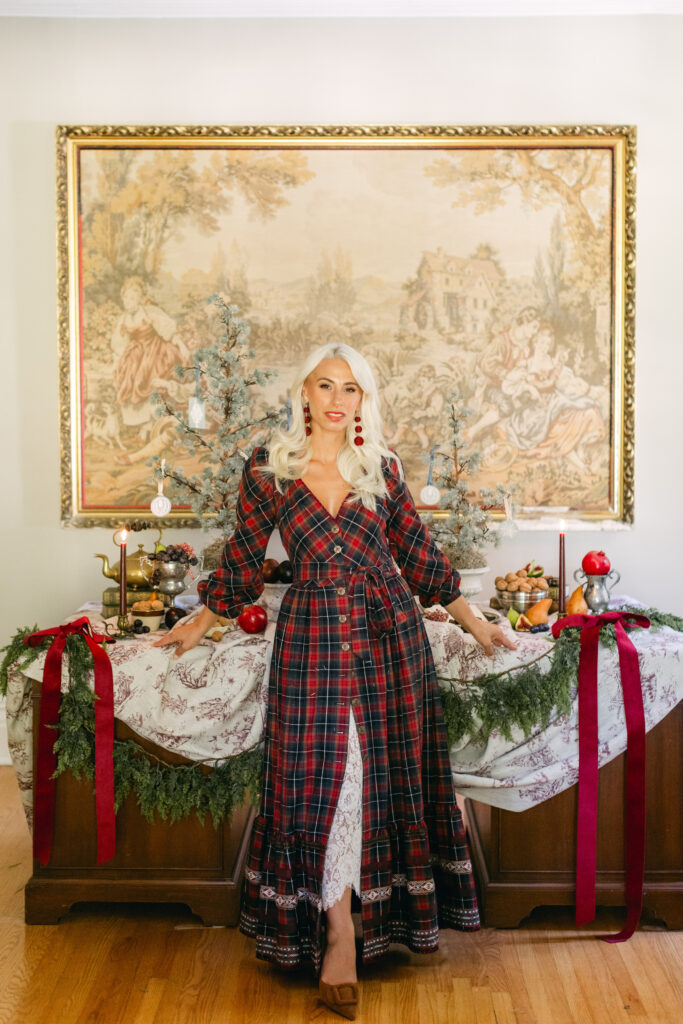
Each family in Provence has its own way of assembling the 13 Desserts, but the essentials are beautifully symbolic:
As I read more about this tradition, something in me stirred and I was instantly transported—the nostalgia, the reverence for heritage, the way sweetness is shared slowly and generously. It reminded me so much of the way I love to host. So I set a table inspired by Provence, layered with my own memories and my own designs.
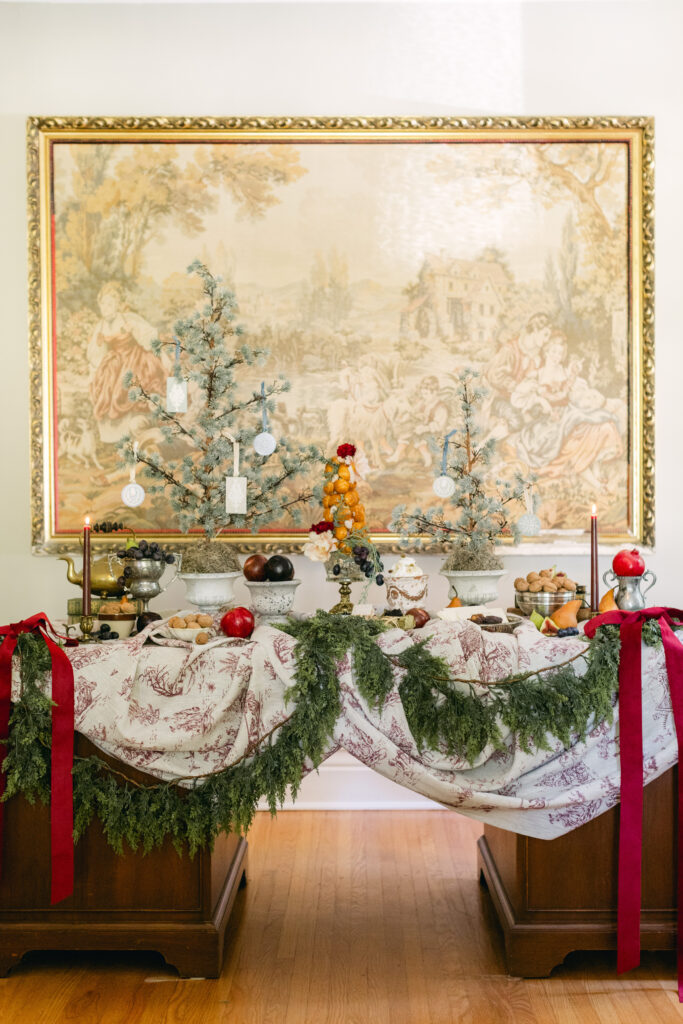
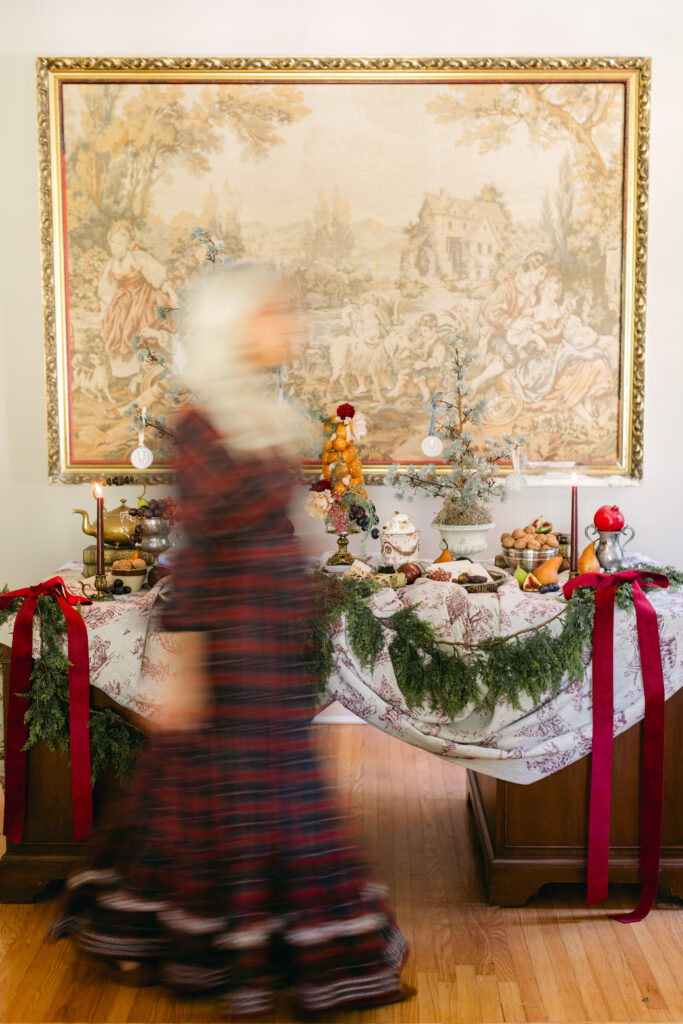
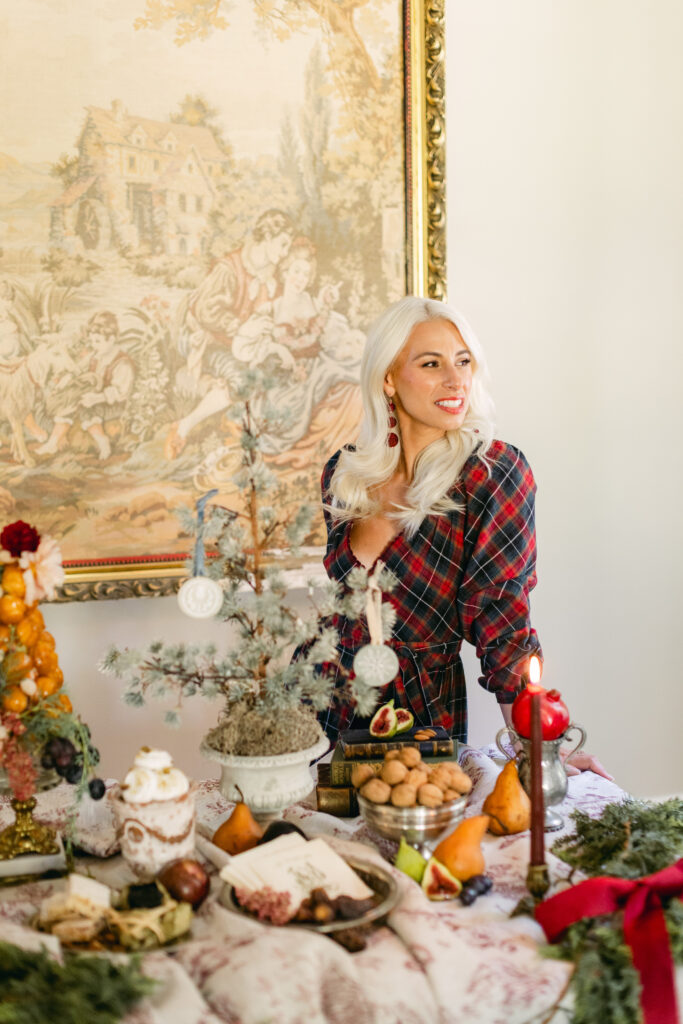
I draped the table in our Winter Wonderland Toile, which captures the serene beauty of the season with tiny vignettes that make the scene feel like a holiday storybook come to life. This linen has always felt like December wrapped in fabric: whimsical, nostalgic, and just a little bit magical. It set the perfect backdrop for a dessert spread rooted in tradition yet imagined through my lens.
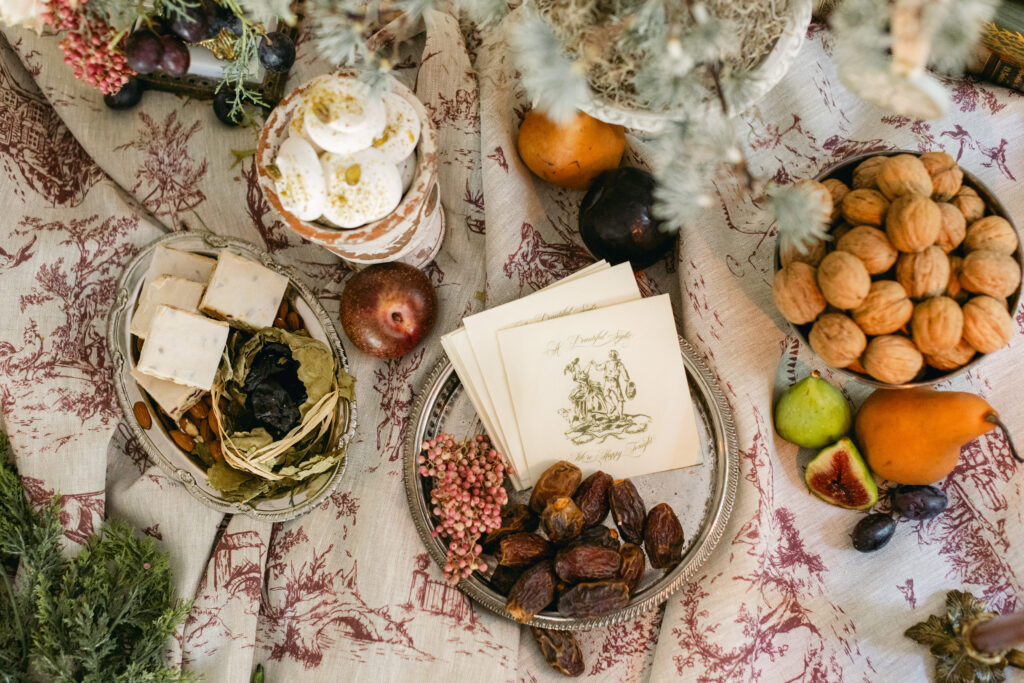
While the original Thirteen Desserts vary from village to village in Provence, they all celebrate abundance and the fruits of the land. I recreated the spirit of the tradition using ingredients I love and pieces that felt true to the season. As I began placing each sweet on vintage dishes and little trays, the table transformed into a quiet celebration of winter, heritage, and the joy of gathering.
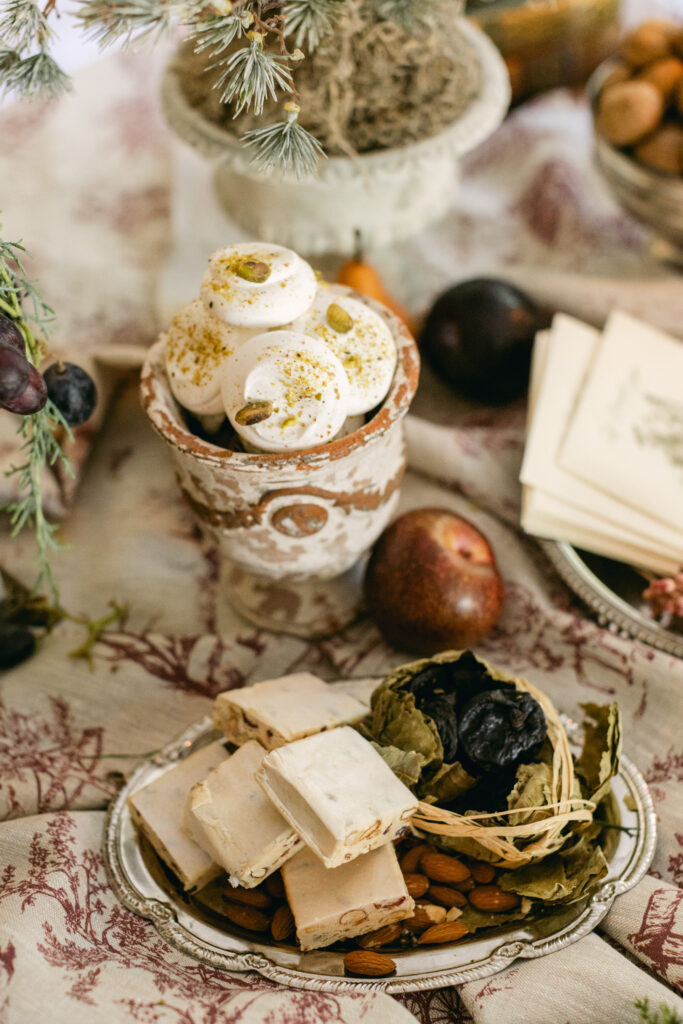
As someone who treasures the nostalgia of slow hosting—the long meals, the rituals, the sense of togetherness—this Provençal tradition spoke to me instantly. It echoes the same Mediterranean spirit I always return to in my work: a love of generous tables, meaningful details, and the romance of heritage.
There is something so beautiful in creating a holiday moment that feels lived-in rather than staged—placing bowls of nuts on the table, setting citrus on little vintage plates, letting things spill, shimmer, and feel effortlessly charming.
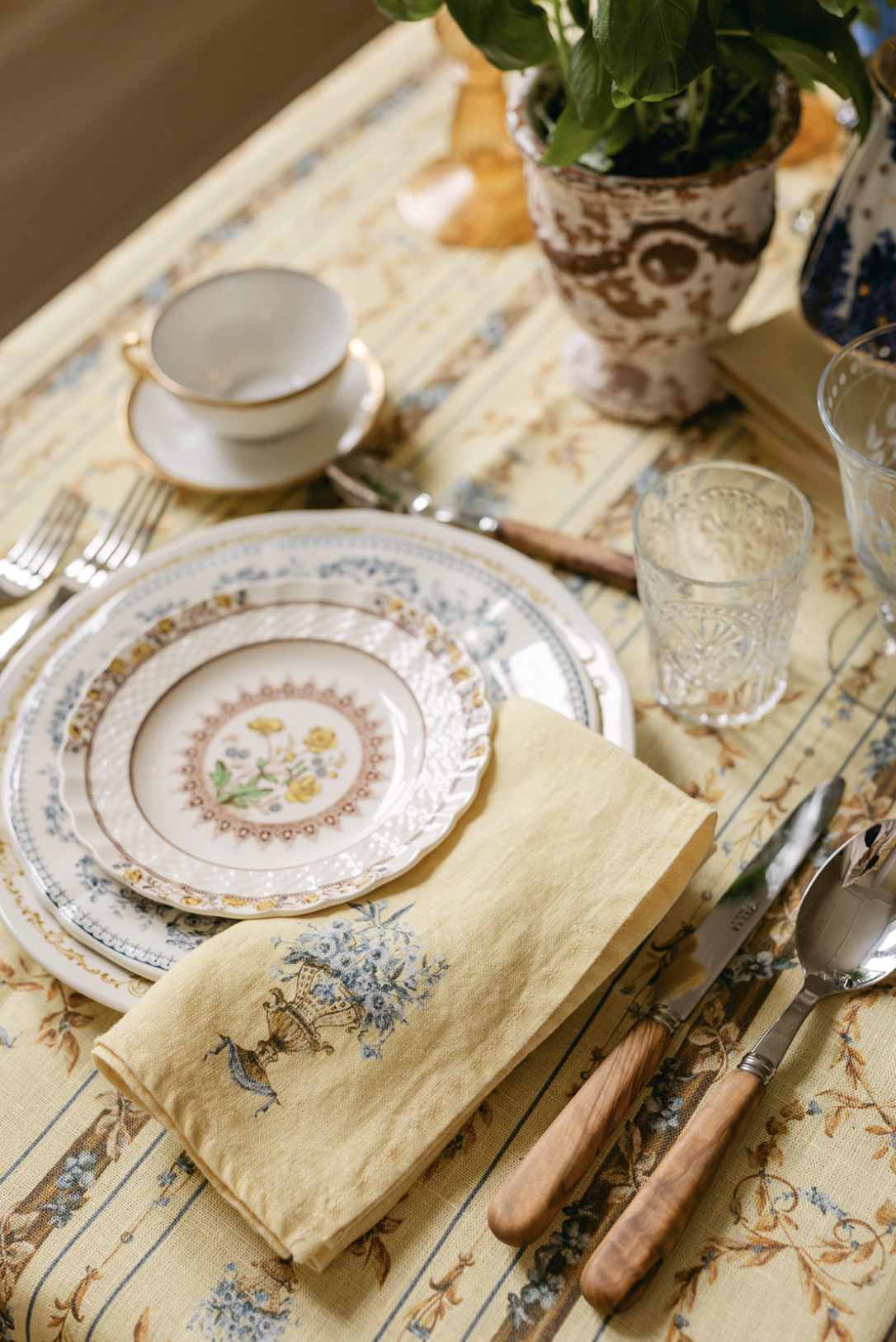
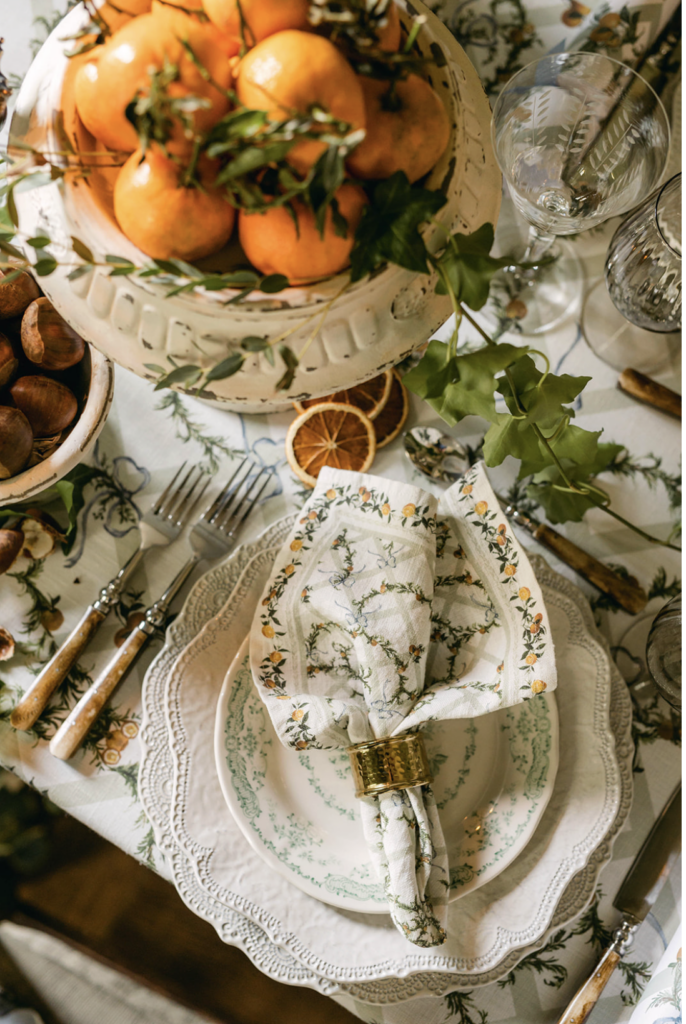
For a brighter, more sunlit take on a Provençal dessert table, I love layering the Clémentine de Provence Treillis tablecloth. Styled here it evokes that same warm, France in winter feel. The citrus motif feels playful yet elegant, a subtle nod to tradition, and pairs beautifully with nuts, dried fruits, and seasonal sweets.
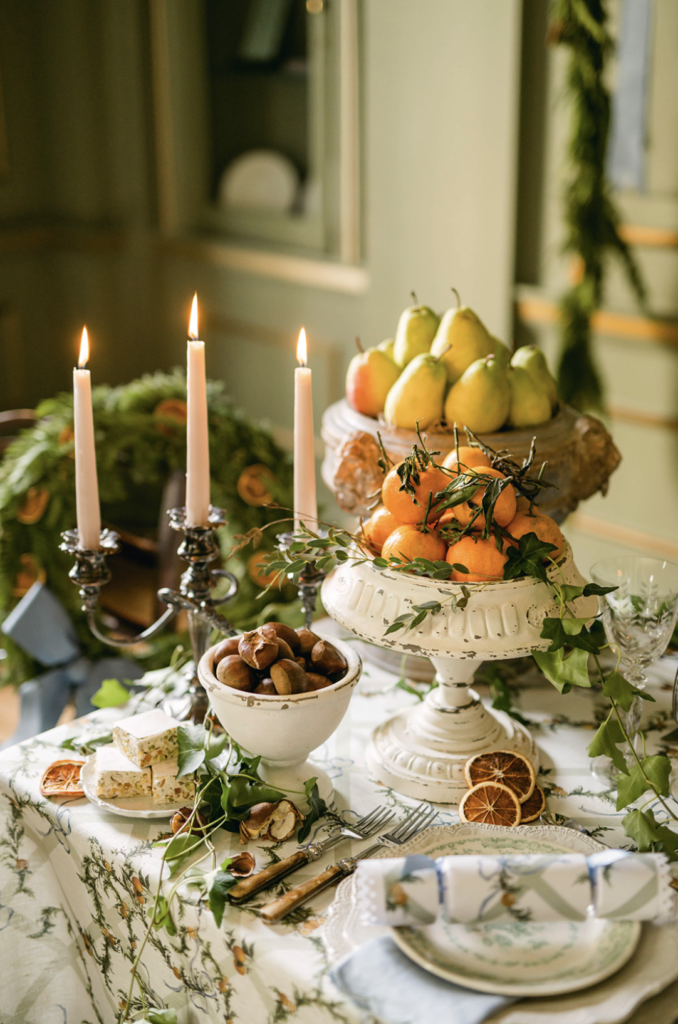
If you’d like to recreate this at home, you don’t need all thirteen items to feel the magic. Choose six or seven that call to you—perhaps:
Style them loosely on your prettiest dishes and linens, light a few candles, and let the table tell the story. It’s a beautiful way to end Christmas Eve—or even to host a simple winter gathering. A tradition that feels grounding and warm, and one that invites you to savour the season slowly.
Sometimes the most meaningful traditions are the ones that make us pause—those that remind us celebration doesn’t need grandeur; it just needs intention, heritage, and a shared table.
I hope this inspires you to create your own version of a Provençal Christmas. Whether you follow the tradition exactly or reinterpret it through your own lens, the heart of it remains the same: sweetness, abundance, and togetherness.